RITUALS OVER ROUTINES
There is a profound difference between a routine and a ritual, yet modern life has blurred the distinction between the two. We have become conditioned to believe that success lies in optimisation—perfecting our morning routines, maximising productivity, streamlining our habits, and measuring our days by how much we accomplish. We wake earlier, move faster, consume more information, answer more emails, and tick more boxes than ever before. Yet despite all of this efficiency, many people have never felt more disconnected from themselves. The truth is that routines organise our schedules, but rituals nourish our humanity.
A routine is functional. It exists to help us complete a task or achieve an outcome. A ritual, however, carries intention. It transforms an ordinary act into something meaningful because it asks us to be fully present. Making a cup of tea, taking an evening walk, writing in a journal, sitting quietly before the world wakes, preparing a meal, or watching the sun disappear below the horizon can all be routines if performed mechanically. Yet the very same actions become rituals when they are approached with awareness, gratitude, reflection, and purpose. The external behaviour may never change, but internally everything shifts.
Our ancestors understood this distinction with remarkable clarity. Long before the language of productivity and performance existed, human societies embedded rituals into every stage of life. They honoured births, celebrated harvests, marked the changing seasons, mourned their dead, initiated children into adulthood, and created ceremonies that reminded communities who they were and what they belonged to. These rituals were never about superstition alone; they were sophisticated psychological, emotional, and social frameworks that helped people navigate uncertainty, grief, joy, transition, and identity. Ritual gave meaning to moments that could not be solved simply by working harder.
Today, many of those sacred spaces have quietly disappeared. We have replaced them with calendars, notifications, deadlines, and endless self-improvement strategies. We know how to optimise our schedules, but we have forgotten how to honour our experiences. In doing so, many of us have become incredibly productive while simultaneously feeling spiritually undernourished. Efficiency has become the measure of worth, yet efficiency alone cannot satisfy the deeper human need for connection, significance, and belonging.
Psychology has long demonstrated that repeated behaviours shape identity. Neuroscience shows that repetition strengthens neural pathways and reinforces patterns of thought and emotion. Anthropology reminds us that rituals have existed across every known civilisation because they create resilience, emotional regulation, and social cohesion. Philosophy asks perhaps the most important question of all: are we merely moving through life, or are we consciously participating in it? Together these perspectives suggest that the quality of our attention matters just as much as the actions themselves. It is not only what we repeatedly do that shapes us, but the meaning we attach to those repetitions.
This is why rituals possess a quiet transformative power. They invite us to slow down enough to notice our lives instead of simply managing them. They remind us that presence is not the absence of ambition but the foundation of fulfilment. They create moments where we step outside the relentless pursuit of “what comes next” and return to the only place life has ever actually existed—the present moment. Rituals cultivate gratitude where routines often cultivate urgency.
Perhaps this is why so many people feel exhausted despite achieving more than previous generations. We have mastered movement but neglected meaning. We have become experts at doing while forgetting how to be. Burnout is often not simply the result of working too hard; it is the consequence of living without enough moments that reconnect us to ourselves. When every action becomes transactional, life begins to feel like an endless list of obligations rather than a series of experiences worthy of our full attention.
The invitation, then, is not necessarily to abandon routines altogether. Structure has its place, and healthy habits support healthy lives. Rather, the invitation is to infuse those routines with intention until they become rituals. To drink your morning coffee without reaching for your phone. To walk without distraction and notice the changing sky. To prepare food with gratitude for the hands that grew it. To write your thoughts without rushing towards the next task. To create small ceremonies that remind you not simply what you have to do, but who you are becoming as you do it.
In a world that celebrates speed, rituals teach reverence. In a culture obsessed with productivity, rituals restore presence. In a society that often measures our worth by our output, rituals gently remind us that our humanity has never depended on how much we produce. It has always depended on how deeply we are willing to experience the life unfolding before us.
Choose rituals over routines whenever you can. Not because they will necessarily make you more productive, but because they will make you more conscious. And in an age where distraction has become the norm, perhaps consciousness is one of the most radical acts of all.
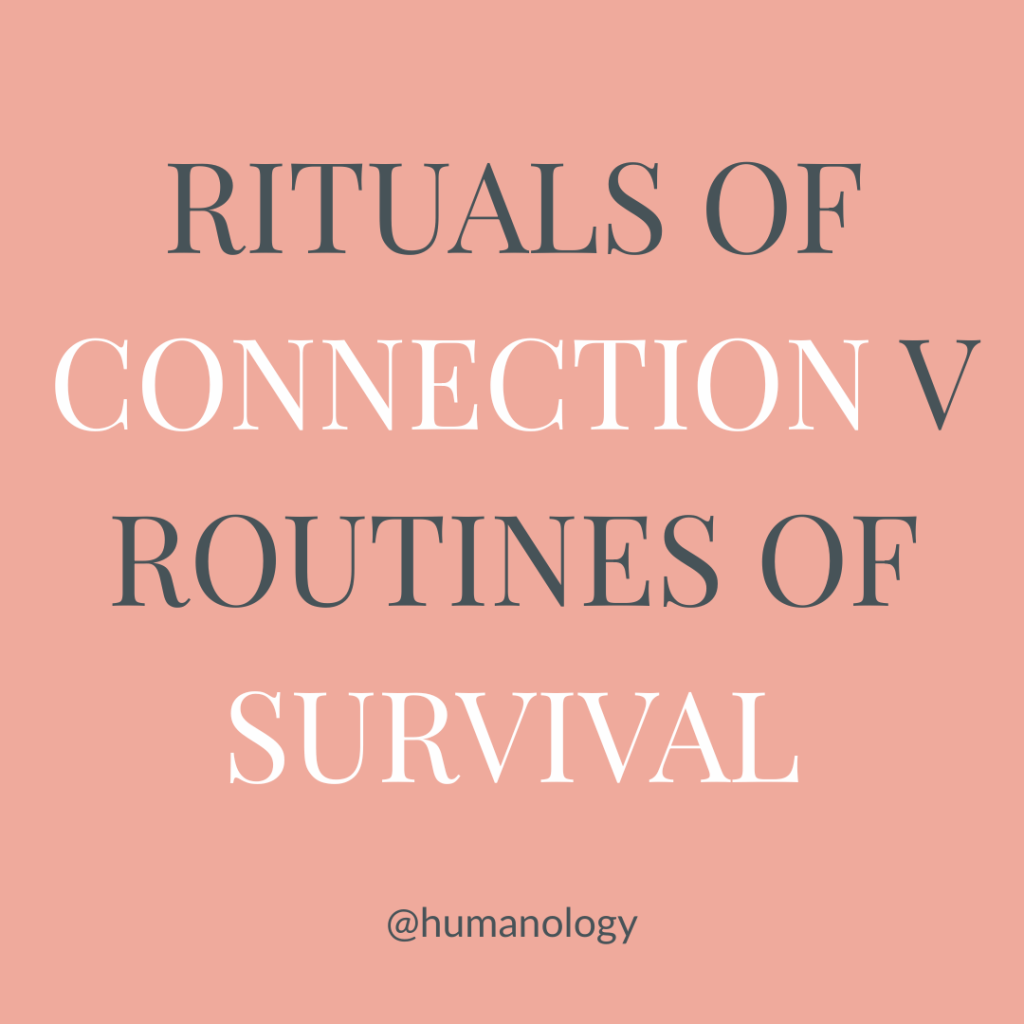
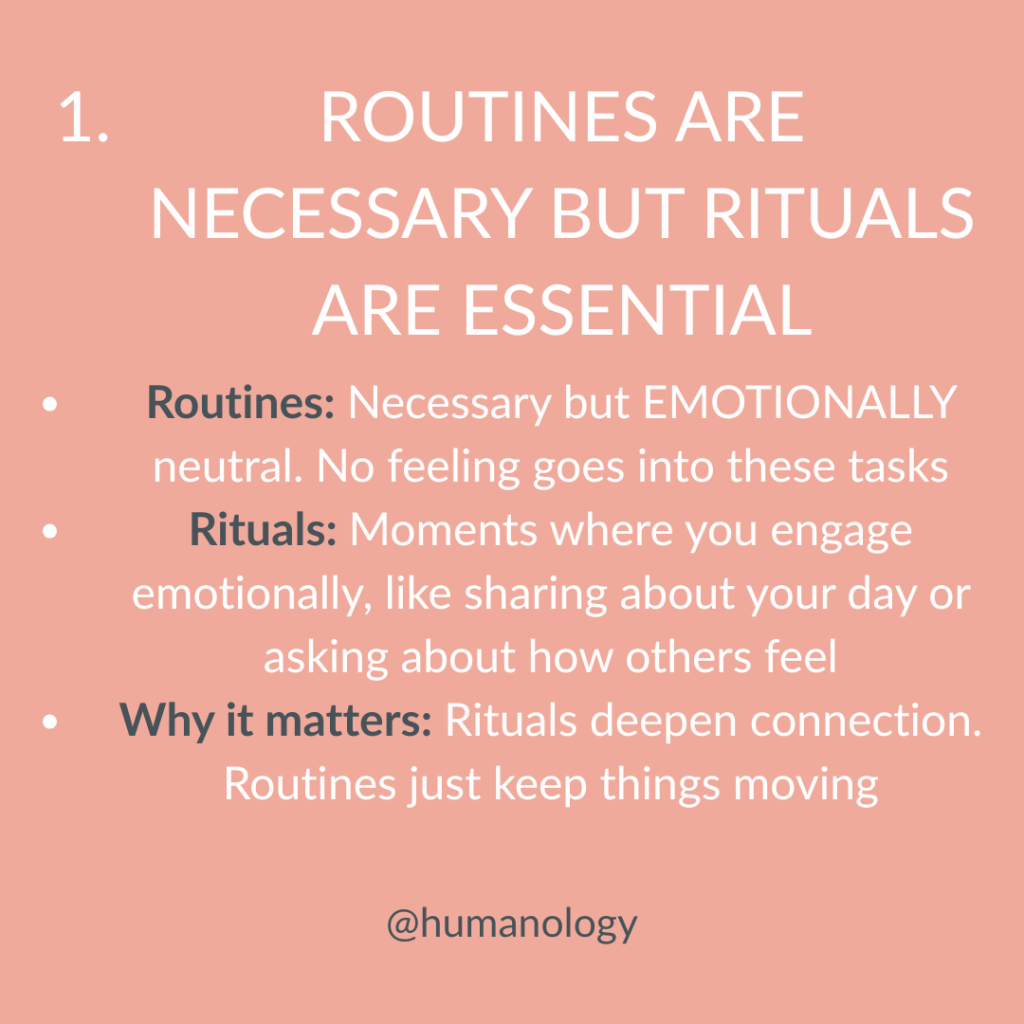
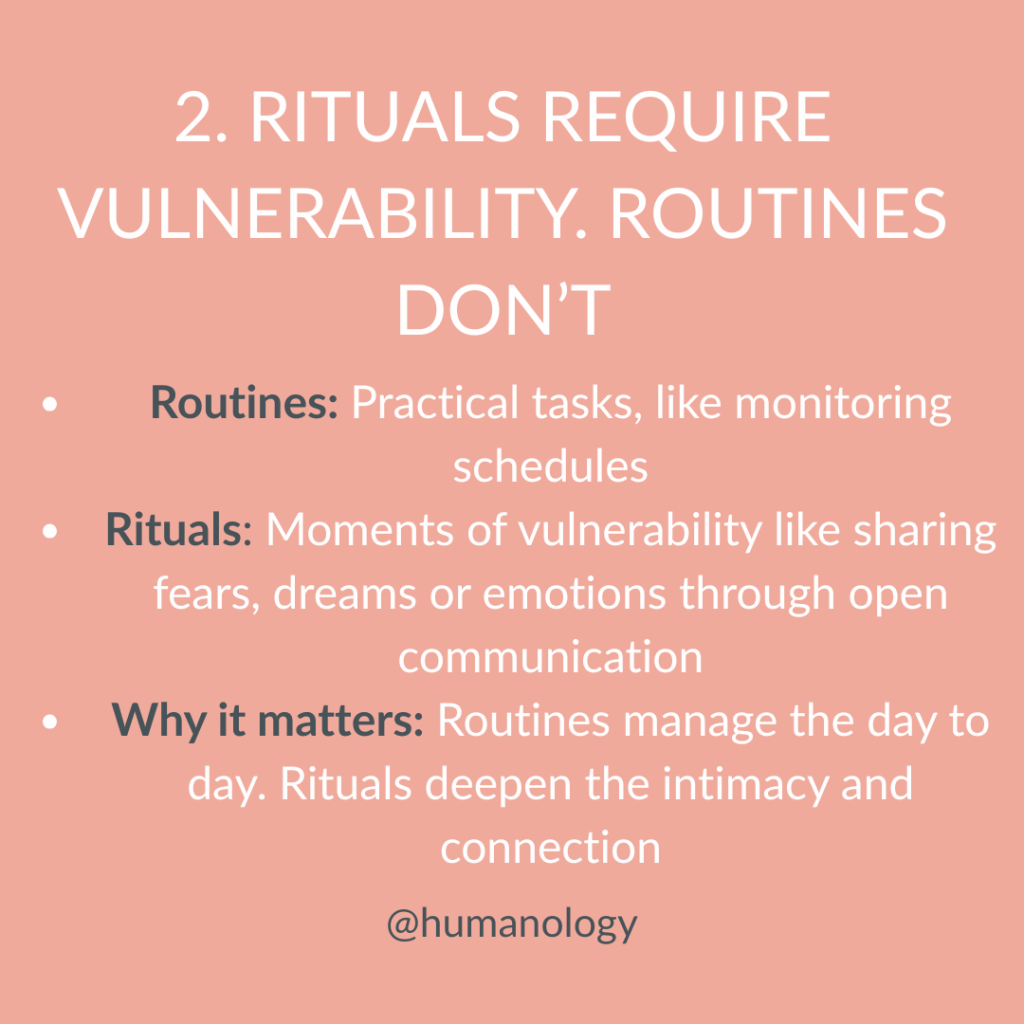
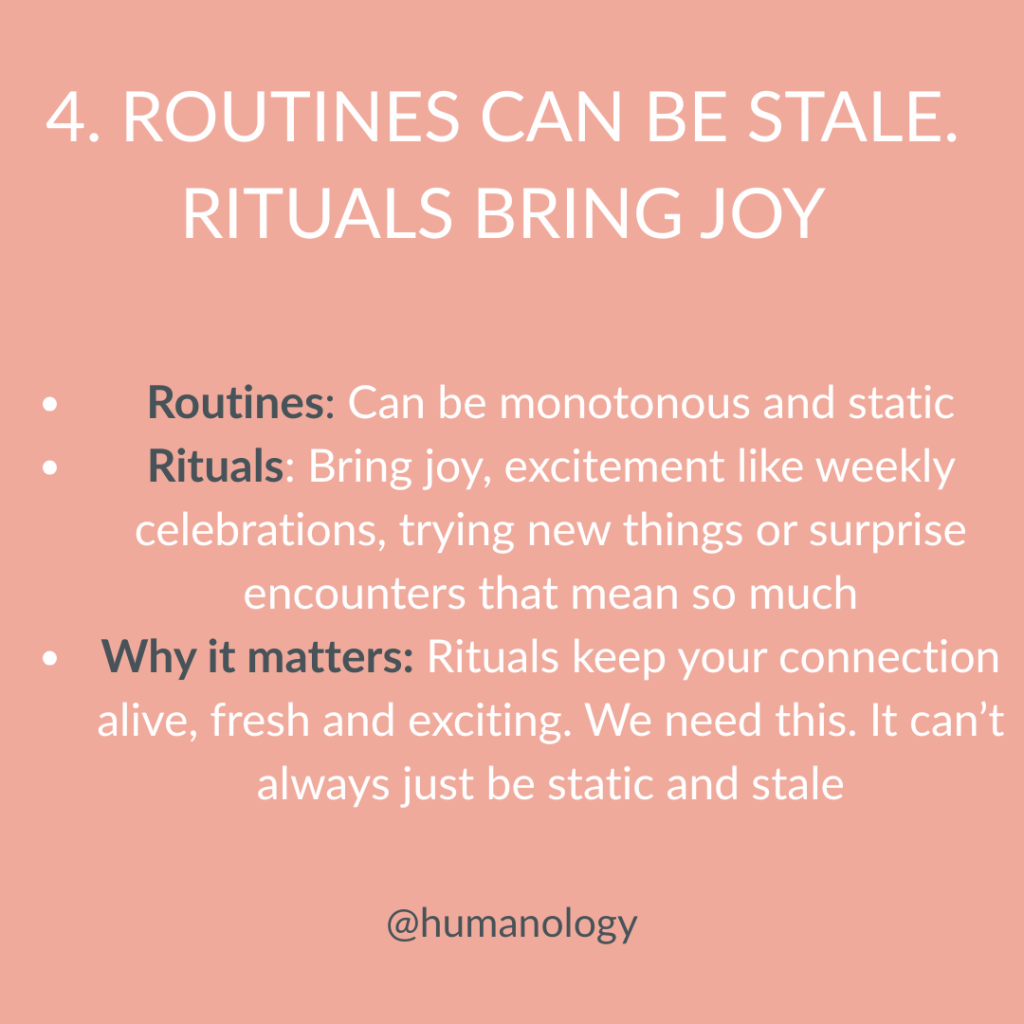
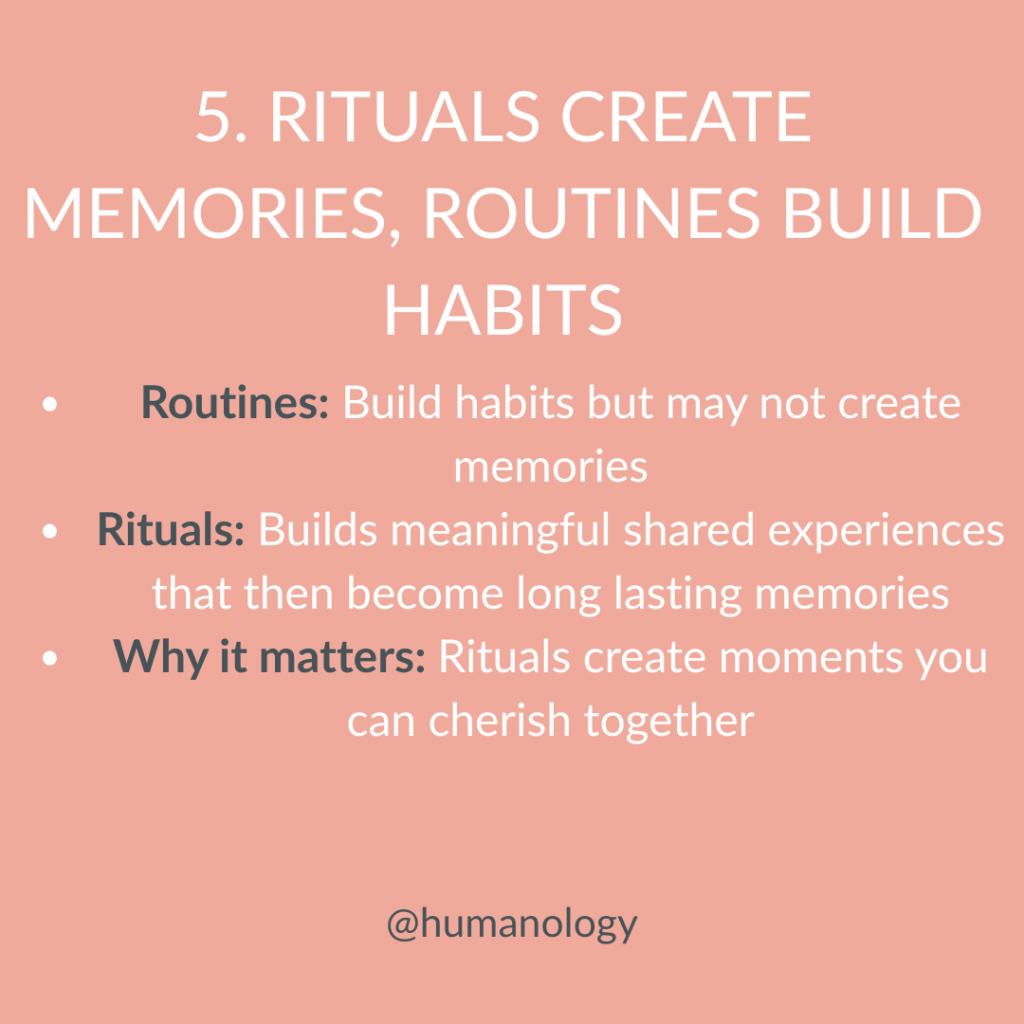
So, as a lover of ROUTINES, I have a pretty good schedule for our weeklies and monthlies over on my fridge. Printed out and colour coded to the max and everyone in my house ticks the boxes and gets their S*it done otherwise noone parties on the weekend…..
ROUTINES VALUE REWARDS
I love a routine and as we can see from the slides where there are the comparisons between the routines and rituals, for me BOTH count.
I have started turning my routines INTO rituals. I’ve gone one step further!
So, the TRE practice, I have now created a pretty good yoga session for myself that integrates traditional yoga methods that I know work, so for me mainly hatha based practices and then, at the end of each practice, I spend about 20 mins doing some TRE methods where I release everything through my psoas, hips, spine etc doing very deep floor based, anti-gravity releasing as the end of my practice.
And I do this twice a week as a gift to myself. I do it on the nights that I don’t eat dinner too late so 5pm, last meal and then I do this at about 9pm when I’m about ready for bed and I set myself up with some soft music, a candle or 2, some calming essential oils and I go deep for about 90 mins just me by myself in this practice that used to be a routine but is now a ritual
The ritual is built or rather grows from the lighting of the candle, the intention I set when I do that, the music in the background, for me often classical, chopin in particular is my beloved most fave and then afterwards, I have the ritual of rolling up my mat, making a chamomile tea, taking a magnesium supplement, having a quick hot shower and getting into bed
Now, just a mo. If you’re listening to this and you’re like, yeah ok crazy, wtf this isn’t my vibe I don’t do oils, I’m not that deep and weird…..That’s fine. My lifestyle isn’t for everyone I’m only making suggestions. You can find your own ways right…..
One thing I will say before I proceed is that I work a lot with clients that have very serious complex OCD traumas. And I’m not talking about OCD as in they like to clean a lot. No, I’m taking deep control issues and blocks that they put in their own way that prohibit their ability to break down control mechanisms in order to have more of an organic flow in their lives. They refuse to find flow because the flow terrifies them. Flow to a lot of people resembles no structure. It doesn’t have boundaries that are tangible or attainable. That they can hold onto, therefore they put up walls and build blocks around every single aspect of their lives so that they can control every single inevitable outcome.
They realise however, that this control is killing them. That they are their very own worst enemy because they are setting structures up that freeze their environment and these blocks become prisons not just for themselves but for everyone else in their lives. Such restrictive, damaging, unhealthy behaviors so that they can grasp control and direct it at their will of every single little thing out of fear of what might happen if they don’t

